History
Papirosy, Belomorkanal and Makhorka
A papirosa is a Russian-style cigarette with a long hollow cardboard mouthpiece instead of a filter; Belomorkanal, launched in Leningrad in 1932, is the most famous brand, and makhorka was the cheap rustic tobacco of soldiers and villagers.
Updated · Cigars Russia Editorial Team
The Sobranie Story →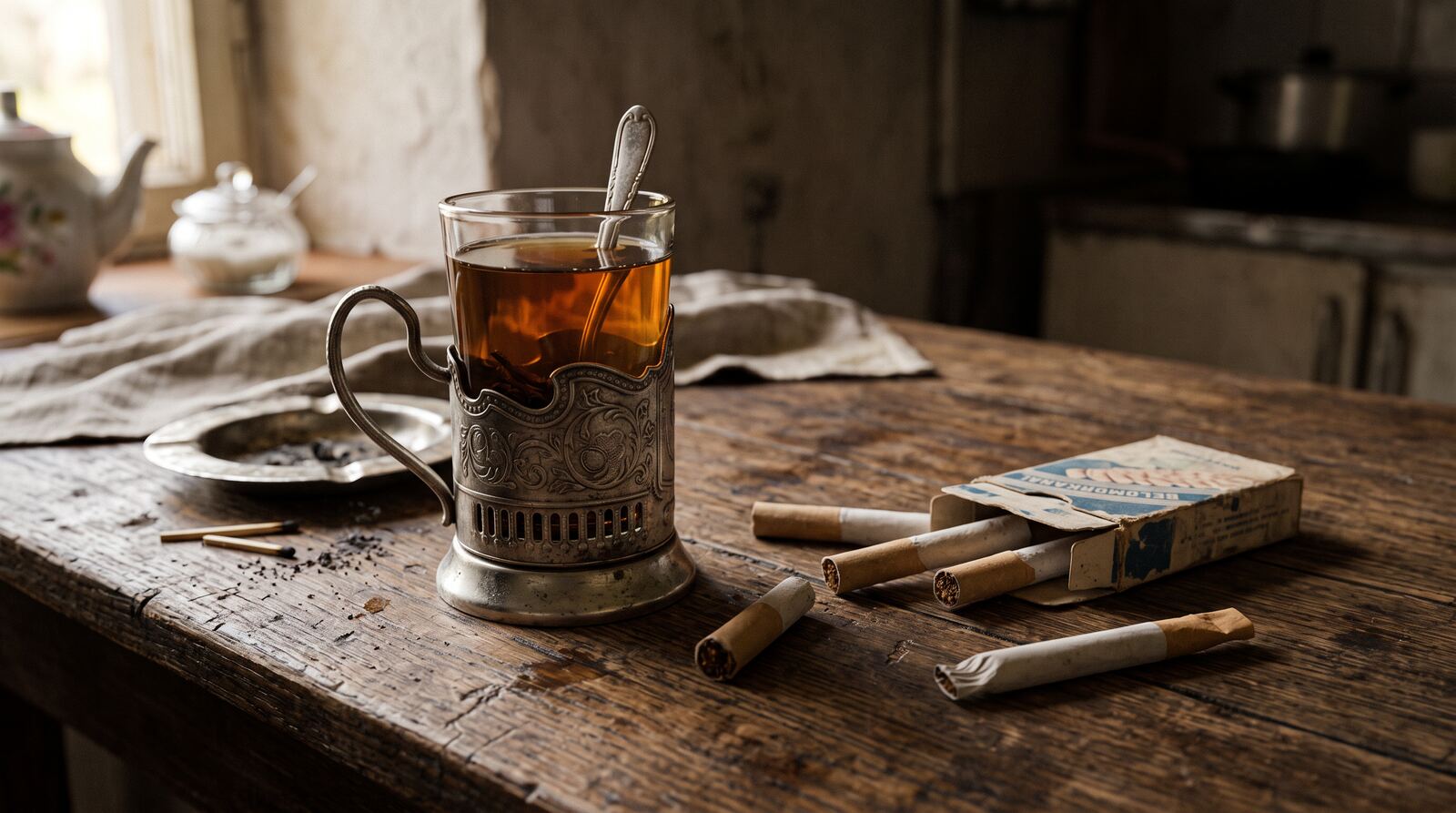
Ask anyone who lived in the Soviet Union about tobacco and they will mention two things: papirosy and makhorka. This page explains both for adult readers interested in history. It is not an endorsement of smoking.
What Is a Papirosa?
A papirosa (plural papirosy) is a cigarette with a short tube of tobacco attached to a long, hollow cardboard mouthpiece. There is no filter: the cardboard tube keeps the burning tobacco away from the lips and fingers and lets the smoke cool slightly. The style spread across the Russian Empire in the 19th century and remained common throughout the Soviet era.
The Crimp
Smokers traditionally pinch the cardboard tube twice, at right angles, so that it holds its shape and catches loose tobacco. Each smoker had a personal way of crimping, and the gesture became part of everyday Soviet life, often shown in films and photographs.
Belomorkanal
Belomorkanal, often shortened to Belomor, is the best-known papirosa brand. It was created in 1932 by the Uritsky tobacco factory in Leningrad to commemorate the White Sea–Baltic Canal, the Belomorkanal. The canal was built largely by Gulag prisoners, many of whom died during its construction, which gives the brand a dark historical association. The pack, showing a map of the canal, became one of the most recognizable designs of the Soviet period.
Belomorkanal papirosy are still made today, including in Russia and Belarus.
Makhorka
Makhorka is a coarse, very strong tobacco made from Nicotiana rustica, a different species from the Nicotiana tabacum used in most cigarettes and cigars. It was easy to grow in Russia's climate and was smoked by peasants and soldiers, typically rolled in a scrap of newspaper into a hand-made cigarette or a "goat's leg" shape. During the Second World War, makhorka was part of Soviet soldiers' rations.
Papirosa vs Cigarette
| Papirosa | Filter cigarette | |
|---|---|---|
| Mouthpiece | Hollow cardboard tube | Filter of cellulose acetate |
| Tobacco section | Short | Full length |
| How it's held | Tube crimped by the smoker | Held by the filter |
| Era | Imperial and Soviet Russia | Dominant worldwide today |
Decline
After 1991, international tobacco companies entered Russia, and filter cigarettes quickly replaced papirosy for most smokers. Papirosy survive as a niche product and a symbol of Soviet nostalgia.
Health
Unfiltered papirosy and makhorka deliver high levels of tar and smoke. All tobacco use carries serious health risks.
Related Reading
The native American origins of Nicotiana rustica are covered on our sister site's guide to native American tobacco.
Frequently Asked Questions
What is a papirosa?
A Russian-style cigarette with a long hollow cardboard tube instead of a filter.
Why do people crimp papirosy?
Pinching the tube in two directions holds it in shape and stops loose tobacco reaching the mouth.
When was Belomorkanal created?
In 1932, by the Uritsky tobacco factory in Leningrad.
Why is it called Belomorkanal?
It commemorates the White Sea–Baltic Canal, built largely by Gulag prisoners.
What is makhorka?
A strong, coarse tobacco from Nicotiana rustica, widely smoked in Russia and given to Soviet soldiers.